Princeton University for International Students: Fees, Financial Aid and Admission Guide

AI Snapshot
Princeton University for International Students: Fees, Financial Aid and Admission Guide is a private higher-education institution in USA. International students can explore its programs and apply through University Finder with free, end-to-end guidance.
Last updated: 30 September 2026
Princeton admitted just 4.0% of applicants to the Class of 2030, the lowest rate in its history, from a record 46,618 applications (College Kickstart, 2026). The class that arrived in September 2026 has 1,414 first-years from 63 countries, and 12.9% of them are international students. Here's the part that matters most: 71% of the class receives financial aid, and the average package is over $83,000 a year (Princeton University, September 2026).
In other words, Princeton University for international students is very hard to get into, but once you're in, money almost never stands in the way. Princeton is need-blind for international applicants and meets their full need, exactly as it does for Americans.
In this guide I'll walk you through everything, step by step: what Princeton costs in 2026-27, how its famous aid works, the admission requirements (including one document most students don't expect), deadlines, campus life, visas, rankings, and the news from the last two years that you should know about.
Quick answer (2026-2027): Princeton's 2026-27 undergraduate budget is about $94,460 before travel, with tuition of $68,140. Princeton is need-blind for international applicants and meets full need with grants, not loans. Families earning up to $150,000 typically pay nothing, and up to $250,000 pay no tuition. The SAT or ACT is required, plus an English test if your schooling wasn't in English. Verified against Princeton's official fees page, Princeton Admission and Bloomberg Government, September 2026.
Princeton University key facts
Fact | Detail |
|---|---|
Type | Private research university (Ivy League) |
Location | Princeton, New Jersey, USA |
Founded | 1746 as the College of New Jersey |
Degrees for undergraduates | AB (arts and sciences) and BSE (engineering) |
Class of 2030 | 4.0% admitted from 46,618; 1,414 enrolled from 63 countries |
International share of Class of 2030 | 12.9% |
Undergraduate budget 2026-27 | About $94,460 before travel |
Aid for international students | Need-blind, full need met with grants |
Testing | SAT or ACT required |
Endowment | About $36.4 billion |
President | Christopher Eisgruber |
Page last verified | 30 September 2026 |
What Is Princeton University, and What Makes It Different?
Princeton was founded in 1746 as the College of New Jersey, making it the fourth-oldest university in the United States. It moved to the small town of Princeton, New Jersey, in 1756 and officially became Princeton University in 1896. Today it sits about an hour from New York City and an hour from Philadelphia by train.
Here's what makes Princeton unusual among the world's top universities. It has no law school, no medical school and no business school. Almost all of its energy and money goes into undergraduates and a relatively small graduate school. Think of it like a top restaurant with a short menu: fewer dishes, but each one gets the chef's full attention. At Princeton, famous professors teach first-year students, and small seminars called precepts are part of most courses.
The undergraduate student body is small, around 5,700 students, and every senior writes an original senior thesis, a research project done one-to-one with a faculty adviser. For many students, that thesis becomes the start of a PhD, a startup or a first job.
Princeton also has one of the largest endowments in the world, about $36.4 billion (Daily Princetonian, May 2026). That wealth is why it can offer such generous aid to international students. The Class of 2030 includes students from 63 countries, from Uganda and Mongolia to Serbia and Guatemala (Princeton University).
Princeton has been led since 2013 by President Christopher Eisgruber, a constitutional law scholar. In 2025 he became one of the most outspoken university leaders in the US, defending academic freedom when the federal government suspended research grants. I explain that in the news section below.
Princeton Pros and Cons for International Students
Here's my honest assessment, with a reason for every point.
Pros
Need-blind and full need met with grants: your family's finances never count against you, and there are no loans in your aid package.
Free for families up to $150,000: a threshold that covers almost every family in Africa and South Asia.
Undergraduate focus: top professors teach undergraduates, and small precepts are part of most courses.
Senior thesis: you graduate with an original research project, which impresses employers and graduate schools.
Princeton also avoided the new endowment tax, which protects its budget for aid in the years ahead.
Cons
Record-low admission rate: 4.0% for the Class of 2030, so Princeton can only be one part of your plan.
No medicine, law or business schools: students set on those careers must go elsewhere for professional degrees.
Graded paper and English test requirements: extra documents to prepare, especially if your school isn't English-medium.
Small-town location: Princeton is quiet, which some students find limiting after a big city.
And budget cuts announced in 2026 may reduce some programs and staff over the next few years.
Who is Princeton best for?
Princeton is ideal for an international student who loves deep thinking, writing and research, wants close contact with professors, and values a quiet, focused campus. It's excellent for future economists, mathematicians, engineers, physicists, policy experts and researchers. Princeton is less suited to someone who wants a big-city experience or who wants to study medicine, law or business directly.
Princeton vs Koç University vs Sabancı University: A Comparison for International Students
Princeton is a small, research-focused university with a strong undergraduate core. In Turkey, Koç University and Sabancı University are two private, English-taught universities with a similar focus on research-led undergraduate education, and both recruit international students. Here's how the three compare.
Princeton University | Koç University | Sabancı University | |
|---|---|---|---|
City | Princeton, New Jersey, USA | Istanbul, Türkiye | Istanbul, Türkiye |
Type | Private (Ivy League) | Private foundation university | Private foundation university |
Teaching language | English | English | English |
Entrance tests for international applicants | SAT or ACT, plus English test if needed | SAT and other international exams | SAT, ACT, GCE A-Levels or TR-YÖS |
Aid model | Need-blind, full need met with grants; free up to $150,000 family income | Merit scholarships of 100%, 75%, 50% or 25% of tuition | Merit-based scholarships by academic record and quota |
Undergraduate cost 2026-27 | $68,140 tuition; about $94,460 with housing, food and health plan | Set yearly in USD; confirm with admissions | Set yearly in USD; confirm with admissions |
Final-year research | Senior thesis required for all | Depends on program | Depends on program |
Sources: Princeton University fees, Princeton Admission, Koç University international tuition and scholarships, Sabancı University 2026-2027 application requirements, checked September 2026. Koç and Sabancı hadn't published 2026-27 international fee amounts on these pages when checked.
The first difference is how scholarships work. Princeton's aid depends only on your family's need, so a low- or middle-income student pays almost nothing if admitted. Koç and Sabancı base scholarships on academic results, so a strong SAT or A-Level record can bring up to 100% off tuition even for families who wouldn't qualify for need-based aid.
The second difference is the odds. With a 4.0% admission rate, Princeton turns down most excellent applicants. Koç and Sabancı are selective too, but a strong profile gives you a far more predictable result, often with a clear scholarship percentage early on.
My honest advice: because Princeton is need-blind, applying costs you little but the application fee and your time, so apply if you're in range. But make sure your list includes a strong, realistic option like Koç or Sabancı .
What the Research Says About Undergraduate Research and the Senior Thesis
Princeton's biggest academic promise is that every student does serious independent research, ending with a senior thesis. Does that actually make a difference to your future? Two peer-reviewed studies say yes, with one important condition.
A large 10-year study by Hernández and colleagues (2018), published in BioScience, followed students across several universities and compared those who did undergraduate research with similar students who didn't. Students who spent 10 or more hours a week on faculty-mentored research across two or more semesters were significantly more likely to finish a science degree, get into graduate training, and be working in science six years later. But just having a short research experience wasn't enough; the benefit came from sustained, mentored work. (Hernández et al., 2018)
A 2025 study by Suart and colleagues in FEBS Open Bio looked specifically at the senior research thesis. Students who completed one reported stronger research skills and a more positive view of failure and resilience in research, and for science students the thesis also shaped their career goals. (Suart et al., 2025)
So what's the lesson? Princeton's junior papers and senior thesis give you exactly the kind of long, mentored research that the evidence rewards. For an international student hoping to go on to a PhD or a research career, that's a real advantage. From what I've seen with students on universityfinder.org, those who pick a thesis topic connected to their home country, like water policy in Pakistan or fintech in Nigeria, often find it opens doors both in the US and back home.
Your Next Step
Here's the honest bottom line on Princeton University for international students. If your grades and SAT are at the top and you love ideas, writing and research, apply. Need-blind aid means your family's income won't count against you, and if you're admitted, cost is very unlikely to stop you. But at a 4.0% admission rate, Princeton should be a dream on your list, not the whole list.
That's where universityfinder.org can help. We have a free university matching tool: share your grades, budget and the program you want, and we'll suggest universities that really fit you, in the US, Europe, Turkey and beyond. No fees and no pressure, just a clearer list.
Princeton's structure is simpler than most big universities. Undergraduates earn one of two degrees:
Degree | What it covers | Examples of concentrations |
|---|---|---|
AB (Bachelor of Arts) | Humanities, social sciences, natural sciences and some computer science | Economics, public and international affairs, molecular biology, physics, mathematics, history, computer science |
BSE (Bachelor of Science in Engineering) | School of Engineering and Applied Science | Computer science, operations research and financial engineering, electrical and computer engineering, mechanical and aerospace engineering, chemical and biological engineering |
Princeton calls majors concentrations, and you choose yours at the end of your second year. Some of the most popular are computer science, economics, public and international affairs (through the School of Public and International Affairs, SPIA), operations research and financial engineering, and molecular biology.
Independent work: Princeton's signature
What really sets Princeton apart is independent work. In your third year, you complete junior papers or projects, and in your final year every student writes a senior thesis. This isn't a class assignment; it's original research with a professor as your personal adviser. Imagine a student from Ghana writing a thesis on mobile money in West Africa, supervised by a leading economist. That's normal at Princeton, and it gives you a real piece of research to show employers and graduate schools.
What Princeton doesn't offer
Because Princeton has no professional schools, you can't study medicine, law or business there, even at graduate level. Students who want those careers usually complete a Princeton degree first and then apply to medical, law or business schools elsewhere. If you want to become a doctor straight after high school, a six-year medical program abroad is a different path to compare [internal link: /blog/study-medicine-abroad].
Graduate study
Princeton's Graduate School offers mainly PhD programs, plus a few master's degrees in areas like engineering, public affairs (the MPA at SPIA), architecture and finance. PhD students are normally fully funded with tuition and a stipend. The graduate school is small and very selective, so research fit with a specific professor matters a lot.
Princeton charges international students exactly the same as American students. Here are the official 2026-27 undergraduate figures:
Item | Cost per year (USD) |
|---|---|
Tuition | $68,140 |
Housing | $13,010 |
Food | $9,110 |
Health plan (if needed) | $4,200 |
Total of these items | About $94,460 |
Source: Princeton University, Admission, Financial Aid and Fees 2026-27, checked September 2026.
A couple of things to know about these numbers. The total above is simply tuition, housing, food and the health plan added together; books and personal costs come on top. Also, the health plan charge applies only if you don't have acceptable coverage, and most international students use the university plan. Flights aren't in the budget either, so add the cost of travelling from Lagos, Karachi or Delhi to New York or Newark, then the short train ride to Princeton. Books, a laptop and winter clothes are extra too. New Jersey winters are cold and snowy.
Graduate costs
PhD students at Princeton usually pay nothing, because tuition is covered by fellowships and they receive a stipend for living costs. Master's programs vary, and some, like the MPA at SPIA, also offer strong funding. Always check the exact program's cost and funding page [internal link: /blog/princeton-tuition-fees-2026-2027].
Before that $94,460 scares you, remember what I said at the start: 71% of Princeton's newest class gets aid, with an average package above $83,000 (Princeton University, September 2026). For most international families, the sticker price has very little to do with the real price.
Princeton Scholarships and Financial Aid for International Students
If you remember only one section of this guide to Princeton University for international students, make it this one. Princeton's own admission office says it clearly: admission is need-blind, there's no disadvantage for students who apply for aid, and the full need of all admitted international students is met the same way as for US students (Princeton Admission). Princeton reviews every application the same way, regardless of citizenship or country of residence.
How generous is it?
In August 2025, Princeton expanded its aid again, starting in the 2025-26 academic year (Bloomberg Government, August 2025):
Family income up to $150,000: tuition, housing and food are typically fully covered, so the family pays nothing.
Family income up to $250,000: tuition is covered in full.
Above $250,000: many families still get significant help, based on their real financial situation.
Princeton's undergraduate aid budget rose about 16% to $327 million for 2025-26. And unlike many universities, Princeton meets need entirely with grants. There are no loans in its aid packages, and it gives no merit scholarships (Princeton University fees page).
What this means for a family in Nigeria, Pakistan or India
Most families in these countries earn far less than $150,000 a year in US dollar terms. So if you're admitted, it's very likely that Princeton will cover your tuition, housing and food in full. Your family would mainly need to think about travel and personal costs, and even those are often partly covered for students with the highest need.
For the Class of 2030, 71% of students receive aid, the average package is over $83,000 a year, and about 25% are eligible for Pell Grants, the US federal grant for low-income students (Princeton University, September 2026).
How to apply for aid
International families usually submit the CSS Profile and supporting income documents from both parents, translated into English. Be complete and honest; the aid office uses these to calculate your grant. Princeton also has an online aid estimator. I always tell students to run it early. It takes a few minutes, and it often turns "impossible" into "actually possible."
Princeton acceptance rate for international students
Princeton admitted 4.0% of its 46,618 applicants for the Class of 2030, the lowest rate in its history, and its yield (the share of admitted students who enrolled) was a high 76% (College Kickstart). International students make up 12.9% of that class. Princeton doesn't publish a separate international admission rate, but because every applicant is reviewed the same way, your chances depend on the strength of your application, not your passport or your bank account.
What you need to submit
The Common Application, Coalition Application or QuestBridge, plus Princeton's own supplement questions and essays.
SAT or ACT scores. Princeton requires one of them from all first-year applicants.
A graded written paper. This surprises many students. Princeton asks for a paper you wrote for a class, with your teacher's grade and comments, and it must be in English (Princeton Admission).
School report, counselor letter and two teacher recommendations.
You'll also send transcripts or academic records, which Princeton reads within your own country's education system, plus midyear and final reports where your school provides them.
Do you need IELTS or TOEFL for Princeton?
Princeton is clear about this. If English isn't your native language and your school doesn't teach mainly in English, you must take an English test: TOEFL, IELTS Academic, Duolingo English Test or PTE Academic. You're exempt if English is your native language or if you've spent at least three years at a secondary school where English is the main language of instruction (Princeton Admission). Many students in Nigeria, Ghana, Kenya and Pakistan who attend English-medium schools fall into the exempt group, but check your case carefully.
The graded paper: how to choose it
Think of the graded paper as a window into your real classroom. Pick an analytical essay or research paper, not a creative story, that shows how you think and write. The teacher's comments are part of what Princeton wants to see, so don't clean them off. From what I've seen with students on universityfinder.org, a solid history or literature essay with honest teacher feedback works better than a "perfect" piece that looks rewritten.
What Princeton looks for
Princeton wants students who will use its independent work and small seminars well: curious thinkers, strong writers and people who'll contribute to a close community. Service also matters to Princeton, whose informal motto is about serving the nation and humanity. A consistent commitment to your community, explained with real detail, can make your application memorable.
Princeton Application Deadlines 2026-2027 (Fall 2027 Entry)
Princeton admits first-year students for the fall term only. There are two rounds:
Round | Application deadline | Decision | Notes |
|---|---|---|---|
Single-Choice Early Action (SCEA) | November 1, 2026 | Mid-December 2026 | Non-binding, but limits early applications to other private US universities |
Regular Decision (RD) | January 1, 2027 | Late March 2027 | The round most international students use |
Financial aid documents | Around your round's deadline | With your decision | CSS Profile and parents' income papers |
Reply to offer | May 1, 2027 | Confirm enrollment | |
Arrival | Late August 2027 | Start visa steps immediately after admission |
Dates follow Princeton's usual admissions calendar; confirm current dates on Princeton Admission before submitting.
Should you apply early?
Princeton's early round is Single-Choice Early Action. It's not binding, so you can still compare offers until May, but you can't apply early to other private universities in the US at the same time. Because Princeton is need-blind, applying early doesn't carry the aid risk that binding Early Decision does at some other schools.
So the question is only about readiness. If your SAT, graded paper and essays are strong by October, early can work well. But if you need the November SAT or more time on your writing, Regular Decision is perfectly fine; the majority of international students apply then.
Timeline to follow
Grade 10 or 11: take the SAT or ACT, plus an English test if you need one.
Summer before final year: choose your graded paper and start your essays.
September to October: ask your teachers and counselor early, and prepare financial and translated documents.
November 1 or January 1: submit your application.
If you're admitted, request your I-20 from Princeton and book your visa appointment the same week.
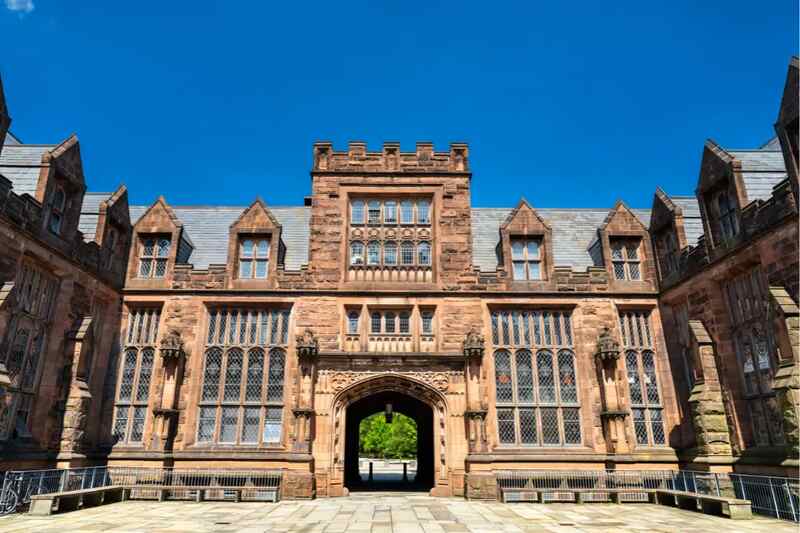
Princeton's campus is in the small, green town of Princeton, New Jersey. It's peaceful, safe and walkable, with Gothic stone buildings, big lawns and a lake. A short shuttle called the "Dinky" connects campus to the main train line, and from there New York City and Philadelphia are each roughly an hour away. Newark Liberty International Airport is the closest major airport for international arrivals.
Residential colleges
Every undergraduate belongs to a residential college, a community with its own dorms, dining hall, study spaces, advisers and events. Think of it as your home base inside the university. First- and second-year students live in their college, and many upper-year students stay too or join one of Princeton's famous "eating clubs" for meals and social life in their final two years. Princeton guarantees housing for all four years, and housing and food are part of your aid package if you receive aid.
Libraries, labs and resources
Firestone Library is one of the largest open-stack libraries in the world, and the campus has modern labs for engineering, neuroscience, environmental science and physics. The Princeton University Art Museum is free for students. Independent work means you'll use these resources seriously, especially in your final two years.
Life as an international student
The Davis International Center supports international students with I-20s, visa questions, travel signatures, work authorization and cultural programming. In 2025, when US immigration enforcement became more intense, it advised international students to always carry their arrival record documents (Princeton Alumni Weekly, 2025). That's the kind of practical guidance you should follow closely.
Princeton is a small town, so it's quieter than New York or Boston. Some students love the calm and focus; others go into the city on weekends. You'll find African, South Asian, Pakistani, Muslim and Arab student organizations, a Muslim chaplaincy, and halal dining options. Winters are cold and snowy, so a proper coat and boots are a must.
Princeton Ranking, Accreditation and Recognition
Princeton's place depends on the ranking. In US-focused tables that measure undergraduate education, it's usually at or very near the top. The QS World University Rankings 2027 tell a different story, since Princeton isn't among the ten highest-ranked US universities; that group runs from MIT, Stanford and Harvard to Berkeley and the University of Chicago (QS Insights, 2026).
Why the difference? QS rewards size, research volume, international faculty ratio and reputation surveys. Princeton is deliberately small, has no medical or law school, and focuses on undergraduates, so it scores lower on volume-based measures even though its quality per student is exceptional. In subject rankings for mathematics, physics, economics, philosophy and public policy, Princeton is consistently among the very best in the world [internal link: /blog/princeton-rankings].
Is a Princeton degree recognized in my country?
Yes. Princeton is accredited by the Middle States Commission on Higher Education (MSCHE), the regional accreditor recognized by the US Department of Education, and its engineering degrees are accredited by ABET where applicable. Employers, governments and universities around the world know and respect a Princeton degree. If you need formal equivalence at home later, through your education ministry or YÖK denklik in Turkey, you'll follow your country's normal process for foreign degrees, and a Princeton degree passes easily.
Getting your F-1 student visa
After you accept your place, Princeton's Davis International Center issues your Form I-20. Your aid letter counts as proof of funding for the part Princeton covers.
Pay the SEVIS I-901 fee online.
Complete the DS-160 visa form and book an interview at the US embassy or consulate in your country.
Take your passport, I-20, admission letter, aid letter and SEVIS receipt to the interview.
Visa waits in cities like Lagos, Abuja, Karachi and Islamabad can be long, and screening became stricter in 2025, including checks of applicants' public social media. So book your appointment the week your I-20 arrives, keep every document organized, and stay in touch with the Davis Center about any change in the rules.
Working while you study
On an F-1 visa, you can work on campus up to 20 hours a week during term and full-time during breaks. Many Princeton students work in libraries, dining halls, labs and research projects. Princeton also funds summer internships and research through various programs, which is a big help for international students who can't easily take unpaid positions.
Working after Princeton
After graduation, Optional Practical Training (OPT) allows up to 12 months of work in the US in your field. Graduates in STEM concentrations, including engineering, computer science, mathematics, physics, and some economics tracks, can add a 24-month STEM extension. For longer-term work, an H-1B visa is usually needed, and that system became more restrictive and costly for employers in 2025. Talk to the Davis Center before you plan around it.
Careers and the Princeton network
Princeton graduates go into finance, consulting, tech, research, public service and international organizations, and many continue to top PhD, law and medical programs. The alumni network is small but famously loyal, and alumni often help current students with internships and advice. And the senior thesis gives you a serious piece of work to talk about in every interview.
Princeton's last two years had it all: suspended research grants, a very public fight for academic freedom, bigger financial aid, deep budget planning, and a surprise escape from the new endowment tax. Here's what happened, newest first, with a reference at the end of each item.
September 2026: the Class of 2030 arrives
Princeton welcomed 1,414 first-year students and 35 transfer students. International students make up 12.9% of the class, from 63 countries. 71% of the class receives aid, with an average package above $83,000, and 19% are the first in their family to go to university. Reference: Princeton University, 4 September 2026.
May 2026: Princeton avoids the 8% endowment tax
Princeton confirmed it won't pay the new 8% federal endowment tax. The tax only applies to universities with more than 3,000 tuition-paying students, and Princeton's 2025 aid expansion made so many students tuition-free that it fell below that line. Experts had expected the tax to cost Princeton about $180 million a year. Reference: The Daily Princetonian, 8 May 2026.
Spring 2026: the lowest admission rate in Princeton's history
Princeton admitted just 4.0% of a record 46,618 applicants to the Class of 2030. Reference: College Kickstart, 2026.
February 2026: deeper budget cuts ahead
In his State of the University letter, President Eisgruber warned of "more targeted, and in some cases deeper" budget reductions over several years. Princeton's investment company lowered its expected long-term endowment return from 10.2% to 8%, which could leave the endowment about $11.3 billion smaller over ten years than earlier forecasts. A hiring freeze had been in place since March 2025. References: The Daily Princetonian, 3 February 2026, Higher Ed Dive, February 2026.
August 2025: free for families up to $150,000
Princeton expanded its aid from the 2025-26 year: families earning up to $150,000 typically pay nothing, and families up to $250,000 pay no tuition. The undergraduate aid budget rose about 16% to $327 million. Reference: Bloomberg Government, 7 August 2025.
April 2025: research grants suspended
On April 1, 2025, Princeton learned that the federal government was suspending several dozen research grants from the Department of Energy, NASA and the Defense Department, reported at around $210 million. President Eisgruber said Princeton would "vigorously defend academic freedom." The next day, Princeton still increased its undergraduate aid budget by 8%, and it planned to sell up to $320 million in bonds to protect its finances. References: Princeton Alumni Weekly, April 2025, Princeton Alumni Weekly, 2025.
March 2025: Eisgruber speaks out
President Eisgruber wrote in The Atlantic that the government's cut of $400 million from Columbia was a radical threat to scholarly excellence, and Princeton began a spending restraint plan. Around the same time, the Davis International Center advised international students to always carry their arrival and departure records. Reference: Princeton Alumni Weekly, 2025.
What this means for you
For international undergraduates, the news is mostly good. Aid is more generous than ever, Princeton avoided the endowment tax, and it stayed need-blind for international applicants. Budget cuts will affect staff and some programs over the next few years, but Princeton has repeatedly protected financial aid. As always, follow the Davis Center's visa guidance closely.
Is Princeton need-blind for international students? Yes. Princeton's admission is need-blind for all applicants, including international students, and it meets the full need of every admitted international student, the same as for US students.
Is Princeton free for international students? For many families, yes. Since 2025-26, families earning up to $150,000 typically pay nothing for tuition, housing and food, and families up to $250,000 pay no tuition. Aid is given as grants, with no loans.
How much does Princeton cost per year in 2026-2027? Tuition is $68,140, housing $13,010, food $9,110 and the health plan $4,200 if needed, about $94,460 in total before books, personal costs and travel. Most families pay far less after aid.
What is Princeton's acceptance rate for international students? Princeton doesn't publish a separate international rate. Overall, it admitted 4.0% of 46,618 applicants to the Class of 2030, and international students make up 12.9% of that class.
Does Princeton require the SAT? Yes. Princeton requires the SAT or ACT from all first-year applicants, including international students.
Does Princeton require IELTS or TOEFL? Only if English isn't your native language and your school doesn't teach mainly in English. Accepted tests are TOEFL, IELTS Academic, Duolingo English Test and PTE Academic. You're exempt after at least three years at an English-medium secondary school.
What is the graded written paper? It's a paper you wrote for a class, with your teacher's grade and comments, submitted in English. Princeton uses it to see how you think and write in a real academic setting.
Can I study medicine or law at Princeton? No. Princeton has no medical, law or business school. Students usually complete a Princeton bachelor's degree first, then apply to those professional schools elsewhere.
Is Princeton affected by the new endowment tax? No. Princeton confirmed in 2026 that its large number of tuition-free students keeps it below the threshold for the 8% endowment tax, which helps protect its financial aid.
universityfinder.org is a member of the Acadex University Admission Association [internal link: /acadex], a global association of admission agencies working in partnership with universities. Acadex members follow a standard admission process, a standard maximum admission time and standard application criteria. Every student also receives a standard orientation that includes an introduction to the host country's laws. Only agencies with a chamber of commerce registration, references and at least five years of university partnerships can join, which protects students from scammers and unauthorized agents.
Official Princeton links: Princeton Admission: International Students · Princeton Fees 2026-27
Sources and verification
Reviewed by the universityfinder.org editorial team (Acadex University Admission Association member) on 30 September 2026. Costs checked against Princeton's official fees page; each news item checked against the sources below.
Princeton University: Admission, Financial Aid and Fees 2026-27
Princeton University: Princeton welcomes the Class of 2030 (September 2026)
Bloomberg Government: Princeton eliminates tuition up to $250,000 (August 2025)
The Daily Princetonian: Princeton spared endowment tax (May 2026)
The Daily Princetonian: State of the University letter (February 2026)
Princeton Alumni Weekly: federal research grants suspended (April 2025)
QS Insights: US performance in the QS World University Rankings 2027
Koç University: tuition and scholarships for international students