Study in Turkey

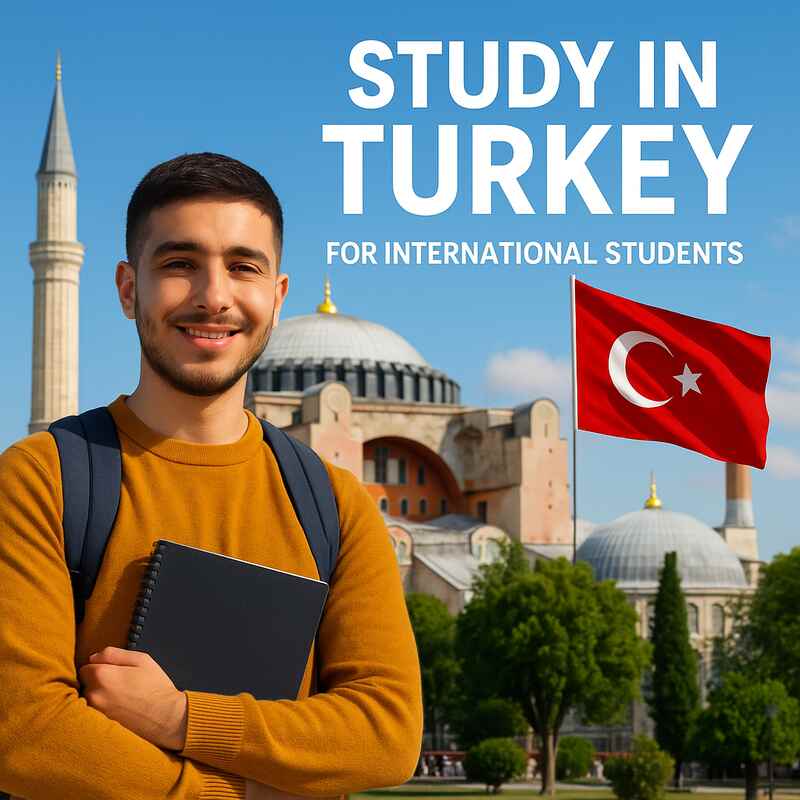
To study in Turkey in 2026 means joining one of the fastest-growing higher education systems in the world. Turkey has become a top destination for international students because of its combination of affordable tuition fees, globally recognized universities, modern campuses, and multicultural lifestyle.
With more than 237 universities in Turkey, both public and private, students from Asia, Africa, Europe, and the Middle East choose the country to earn internationally accredited degrees in fields like medicine, dentistry, engineering, business, law, and social sciences.
Turkey’s location at the crossroads of Europe and Asia also makes it a global hub for education, culture, and travel opportunities.
Best Universities to Study in Turkey for International Students
The best universities in Turkey consistently rank in QS World Rankings and Times Higher Education (THE). These institutions combine academic excellence with modern research centers and active international student communities.
Koç University: globally ranked, strong in medicine, law, and engineering.
Sabancı University: interdisciplinary education, top facilities, modern labs.
Istanbul University: one of the world’s oldest universities, with historical prestige and modern programs.
Middle East Technical University (METU): leading public university, globally respected for engineering and science.
Bilkent University: known for engineering, social sciences, and research partnerships.
Istanbul Medipol University: popular for study medicine in Turkey in English, with WDOMS listing.
Bahçeşehir, Aydın, Istinye, and Altınbaş Universities: private universities attracting thousands of international students every year.
These universities in Turkey for international students provide English-medium programs, modern facilities, and global recognition.
Tuition Fees in Turkey for International Students
One of the main reasons students choose to study in Turkey is affordable education without compromising quality.
Public Universities in Turkey
Tuition fees: $1,000 to $9,000 per year.
Turkish-taught programs are cheaper, English-medium slightly higher.
Private Universities in Turkey
Tuition fees: $2,000 to $20,000 per year.
Medicine and health sciences programs: $15,000 to $44,000 annually in private universities.
When compared to the study in UK, USA, or Australia (where fees can be $40,000 – $70,000 annually), Turkey offers excellent value for money.
Scholarships & Financial Assistance
International students benefit from multiple scholarships in Turkey:
Türkiye Scholarships (YTB): Covers tuition, accommodation, monthly stipend, health insurance, and flight tickets.
University-specific scholarships: Merit-based funding at Koç, Sabancı, Bilkent, and private universities.
IsDB (Islamic Development Bank) Scholarships: Available for students from developing countries.
Discounted tuition scholarships: Offered by many private universities for early applicants.
These opportunities make the study in Turkey cost even more affordable.
Cost of Living in Turkey
Another reason to study in Turkey for international students is the low living expenses compared to Western countries.
Housing: public dormitories $40–$100/month, shared flats $150–$300/month.
Food: university cafeterias provide meals for $1–$2.
Transport: student discounts for metro, buses, ferries, around $10–$20/month.
Internet & utilities: around $30–$50/month.
On average, international students spend $350–$700/month depending on city and lifestyle.
Admission Process to Study in Turkey
The process to apply to universities in Turkey is straightforward:
Choose a program and university.
Submit online application with passport, transcripts, and certificates.
No entrance exam for private universities; public universities require YÖS exam.
No IELTS/TOEFL needed for many English-medium programs (universities provide their own English proficiency tests).
Receive acceptance letter and pay tuition fees to confirm admission.
This simple application system makes studying in Turkey more accessible than many Western countries.
Student Visa & Residence Permit
To study in Turkey, international students need a student visa.
Apply at the Turkish embassy with acceptance letter and proof of funds.
Visa is usually granted within 4–8 weeks.
After arrival, students apply for a residence permit, supported by their university.
This smooth visa process is one reason Turkey attracts so many students from abroad.
Studying Medicine in Turkey – Popular & Recognized
One of the top choices for international students is study medicine in Turkey in English.
Duration: 6 years (including pre-clinical and clinical training).
Tuition fees: $15,000 – $44,000 annually in private universities.
Accreditation: Many faculties are listed in WDOMS and recognized by ECFMG for USMLE exams.
Clinical practice: Students gain experience in affiliated hospitals.
Dentistry, pharmacy, physiotherapy, and nursing are also widely available in English.
Student Life in Turkey
International students in Turkey enjoy a rich cultural and social lifestyle:
Istanbul as a hub: Combination of historical landmarks, modern lifestyle, and student communities.
Multicultural population: Over 200,000 international students are currently enrolled in Turkey.
Student discounts: Affordable transport, cinema, and dining.
Cultural immersion: East meets West with festivals, Turkish language courses, and Erasmus+ exchanges.
Safety & Multicultural Environment
Turkey is considered a safe country for international students. Universities provide campus security, dormitories are safe, and student-friendly cities like Istanbul, Ankara, and Izmir have supportive communities.
The multicultural environment makes it easier for international students to adapt. Many programs have students from Africa, Asia, and the Middle East, creating a global student family.
Part-Time Jobs & Career Opportunities
While studying in Turkey, students can also look for part-time jobs:
Teaching English, working in cafes or IT services.
Internships through Erasmus+ or university career centers.
Many graduates stay in Turkey after graduation to work in multinational companies, especially in Istanbul.
Knowing some Turkish language increases career opportunities in local companies.
Why Apply Early to Turkish Universities
Seats in medicine, dentistry, and engineering fill quickly, especially in private universities in Istanbul. Applying early ensures:
Guaranteed seat in chosen faculty.
Access to early bird tuition discounts.
More time for visa and residence procedures.
Late applicants often face limited choices or higher tuition fees.
Why Study in Turkey Instead of Other Countries?
Tuition 3–5 times cheaper than USA, UK, Canada, Australia.
Globally recognized degrees (ABET, AACSB, WDOMS).
Multicultural safe environment.
Strategic location connecting Europe and Asia.
Over 200,000 international students in 2026.
This makes Turkey one of the best countries to study abroad for international students.
To study in Turkey in 2026 is to join a higher education system that combines affordability, quality, and global recognition. With top-ranked universities, scholarships, English-medium programs, low living costs, and a multicultural student life, Turkey is one of the best destinations for international students.
Whether your goal is to study medicine in Turkey, pursue engineering, business, or social sciences, the country offers excellent academic opportunities and a life-changing cultural experience.
For those seeking affordable, world-class education in a unique setting where East meets West, studying in Turkey is an opportunity not to be missed.


When considering international education, Turkey stands out as an affordable and high-quality option. The costs of study in Turkey are significantly lower than in many Western countries, making it a popular destination for students seeking an excellent education at a reasonable price. For international students, the combination of affordable tuition fees, modern facilities, and globally recognized degrees makes Turkey an ideal choice.
Depending on the institution, tuition fees at the best Turkish universities may be charged by both public and private institutions. Tuition fees in public universities are typically lower, ranging from $500 to $4,000 per year, depending on the program and the language of instruction. Turkish courses are frequently less expensive, whereas English courses may have slightly more expensive fees. Public universities like Istanbul University, Middle East Technical University (METU), and Ankara university are among the best.
Breakdown of Tuition Fees and Costs in Turkey
Public Universities: $500 to $4,000 per year depending on program and language of instruction (Turkish-taught programs are usually cheaper than English-taught ones).
Private Universities: $3,000 to $44,000 annually, with medicine, dentistry, and engineering at the higher end of the scale.
Medical Programs: Typically the most expensive, ranging between $13,000 to $44,000 per year across private institutions.
Master’s & PhD Programs: Average between $3,000 to $12,000 annually, making postgraduate study more affordable compared to Western countries.
Living Costs: Monthly expenses average $300–$600 for food, transport, and other essentials, excluding accommodation.
Accommodation: Dormitory options start from $100–$250 per month, while private rentals range from $200–$600 depending on the city.
Scholarships & Discounts: Many universities offer partial scholarships or early-payment discounts, which can reduce tuition by 25–50%.
However, private tuition fees in Turkey typically range between $3,000 and $44,000 annually. Although private universities are costly, they provide a high quality of education, modern facilities and individualized study. Koç University, Bilkent University and Sabanc University are among the top private institutions offering programs in many fields of study with world-class status.
In addition to tuition fees, the cost of living in Turkey is relatively low compared to other countries. Turkey offers a cost-effective higher education option for international students, with an average monthly expenditure of $300 to $600 on food and transportation. Students in Turkey can expect a combination of affordable and high-quality education at reasonable costs.'

In Turkey, private universities are widely acclaimed for their exceptional quality of education and internationally recognized degree programs. The institutions' modern facilities, international faculty, and a diverse range of programs taught in English make them an appealing destination for international students.
The private universities in Turkey are known for their student-centered approach, which results in smaller class sizes and more personalized learning opportunities. The universities that are ranked among the top in Turkey, such as Koç University, Sabanc University and Bilkent University have established partnerships with institutions worldwide, providing opportunities for global learning and exchange programs.
While the tuition fees at private universities in Turkey are higher than those at public institutions, ranging from $3,000 to $44,000 annually, they offer excellent facilities, research opportunities, and a strong emphasis on career development. These universities are particularly appealing to students seeking an international-level education at a lower cost compared to universities in Europe or the US.
With their commitment to academic excellence and innovation, private Turkish universities continue to attract students from around the world, offering a rewarding and enriching educational experience.
Public universities in Turkey are renowned for their high-quality education and affordability, making them an excellent choice for international students. These institutions, such as Istanbul University, Middle East Technical University (METU), and Ankara University, offer a diverse range of programs across various fields, including engineering, medicine, social sciences, and the arts.
Compared to private universities, Turkish public universities have significantly lower tuition fees. Tuition fees for international students range from $500 to $4,000 per year, depending on the program and whether it's taught in Turkish or English. With this low cost, students can receive quality education without the financial strain of studying abroad.
Turkish public universities have strong academic programs and a cultural heritage, as well as competitive tuition fees. The majority of these establishments possess state-of the art amenities and sizable libraries, facilitating education for students. In addition, the varied student population fosters a vibrant campus community where international students can interact with peers from different backgrounds.
Public universities in Turkey are a valuable source of education due to their reputation for providing excellent academic programs, affordability, and cultural immersion.
Studying Medicine, Dentistry, Engineering, Business Administration, and International Relations in Turkey
Turkey has emerged as a favored destination for international students seeking to pursue degrees in various fields, including medicine, dentistry, engineering, business administration, and international relations. With its rich cultural heritage, modern educational infrastructure, and affordable tuition fees, Turkey offers an attractive alternative to studying in Western countries.
1. study medicine in Turkey
Studying medicine in Turkey is a compelling choice for international students. Turkish medical schools are known for their rigorous curricula and state-of-the-art facilities. Universities such as Hacettepe University and Istanbul University offer programs that align with international standards. Tuition fees for medical programs typically range from $6,000 to $15,000 annually, significantly lower than fees in the US, where tuition can exceed $50,000 per year.
Turkey's healthcare system is rapidly evolving, providing students with ample clinical exposure and hands-on experience. The country's unique geographical position between Europe and Asia also offers insights into diverse healthcare practices. Studying medicine in Turkey not only promises a quality education but also an opportunity to experience a multicultural environment.
2.study dentistry in Turkey
Turkey's dental universities are also renowned for their affordability and quality. Dentistry degrees from top universities such as Istanbul University and Ege University are of international quality.... Dentistry courses are available at annual tuition costs ranging from $12,000 to $34,000. With fully-equipped dental clinics and experienced faculty, students receive comprehensive training. Studying dentistry in Turkey is a more affordable option than studying abroad in the UK and the US, where programs can cost over $60,000 per year. Moreover, the hands-on training and internship programs in Turkey offer students practical knowledge that can enhance their employability.
3. study engineering in Turkey
Turkey is increasingly recognized for its engineering programs, which are offered by leading institutions like Koç University, Sabancı University, and Middle East Technical University (METU). Engineering disciplines, including mechanical, civil, and computer engineering, are in high demand globally. Tuition fees for engineering programs typically range from $4,000 to $15,000 per year.
The engineering programs in Turkey are well-regarded for their emphasis on innovation and research. International students benefit from modern laboratories and facilities, preparing them for successful careers in various engineering fields. Compared to studying engineering in Western countries, where tuition can reach $40,000 or more, Turkey offers a more cost-effective alternative, coupled with a vibrant educational experience.
4. study business administration in Turkey
The field of business administration is another area where Turkey excels, with institutions like Boğaziçi University and Istanbul University offering highly regarded programs. Tuition fees for business administration degrees range from $3,000 to $15,000 annually, making them significantly more affordable than similar programs in countries like the US or Canada, where tuition can exceed $30,000.
Studying business in Turkey provides students with a unique perspective on emerging markets and global business practices. The country’s strategic location between Europe and Asia makes it a hub for international trade and commerce. Students gain valuable insights into both Eastern and Western business cultures, preparing them for careers in a globalized economy.
5. study international relations in Turkey
Due to its geopolitical importance, Turkey is a good place to study international relations. This area of study has strong academic programs at universities like Kadir Has University and Istanbul Bilgi University. International relations program tuition costs usually run between $4,000 and $12,000 annually....
The history, culture, and active participation in international diplomacy of Turkey make it a good country for international relations students. It frequently incorporates practical aspects like internships at embassies and international organizations. This is a common practice. The cost and intellectual expense of studying international relations in Turkey are comparable to those in Western countries, where similar programs may require more than $25,000.
For international students, Turkey offers a unique combination of quality education, cultural diversity, and affordability. The cost of living in Turkey is generally lower than in Western countries, making it easier for students to manage their finances. Additionally, Turkish universities are increasingly gaining recognition worldwide, with many programs taught in English, catering to the needs of international students.
Turkey's strategic location, historical richness, and dynamic society also provide students with invaluable life experiences. By choosing to study in Turkey, students can immerse themselves in a vibrant culture while receiving a top-notch education in their chosen field.
Medicine, engineering, and law are among the most prestigious degrees in Turkey. They cost more than other programs because they require:
Advanced hospital partnerships and teaching clinics.
Simulation labs, cadaver studies, and clinical equipment.
Specialized faculty (doctors, engineers, lawyers).
Despite this, Turkey still offers these high-demand programs at half or one-third of Western costs, making it a leading destination for affordable medical and technical education.
While Turkey has become a popular destination for international students seeking higher education, there are several disadvantages that potential applicants should consider before making their decision. Here are five notable drawbacks of studying in Turkey.
1. Language Barrier: Although many universities offer programs in English, the majority of daily life and administrative processes are conducted in Turkish. This can create challenges for international students who do not speak the language, affecting their ability to communicate effectively and navigate university life.
2. Recognition of Degrees: While some Turkish universities are gaining international recognition, the acceptance of Turkish degrees can vary by country and institution. Students planning to work abroad should verify that their qualifications will be recognized in their desired location, which may require additional accreditation or certification.
3. Cultural Adjustment: Moving to Turkey can require significant cultural adaptation. Differences in social norms, customs, and lifestyle may pose challenges for international students, particularly those from Western countries. This adjustment period can lead to feelings of isolation and homesickness.
4. Limited Course Options in English: Although many universities are expanding their English-language offerings, the variety of programs available in English is still limited compared to countries with a more established international education system. This may restrict options for students seeking specific fields of study.
5. Political Climate: Turkey's political environment can be unpredictable, which may concern some international students. Changes in policies, regulations, or social unrest can impact the overall experience and safety of students in the country.
In summary, while studying in Turkey can offer unique experiences, international students should weigh these disadvantages against their academic goals and personal circumstances.
As international students explore options for higher education, Turkey has emerged as a compelling alternative to traditional study destinations like the EU and the UK. While all three regions offer unique advantages, several key factors set them apart in terms of cost, quality of education, and cultural experiences.
1. Tuition Fees and Costs of Living
One of the most significant advantages of studying in Turkey is the affordability of tuition fees compared to the UK and many EU countries. In Turkey, tuition fees for international students typically range from $3,000 to $15,000 per year, depending on the program and university. In contrast, the UK boasts tuition fees that can exceed £20,000 (approximately $25,000) annually for international students, while many EU countries, such as Germany and France, also have rising costs, albeit often lower than the UK.
Additionally, the cost of living in Turkey is generally more manageable than in the UK and some EU countries. Students can find affordable accommodation, food, and transportation, allowing them to maintain a comfortable lifestyle without breaking the bank.
2. Quality of Education
Turkey is home to several reputable universities, such as Koç University, Sabancı University, and Istanbul University, which are increasingly gaining recognition in global rankings. Many Turkish universities have modern facilities and diverse programs, often taught in English, catering to the needs of international students.
However, the EU and the UK are home to some of the world’s top-ranked institutions, including the University of Oxford, University of Cambridge, and ETH Zurich. These universities have established reputations and extensive networks, offering students unparalleled resources and opportunities for research and professional development.
3. Cultural Experience
A unique opportunity to study in Turkey offers students a chance to experience contrasting cultures of Europe, Asia, and beyond. It provides students with the opportunity to visit historical places, taste a vibrant cuisine and interact with locals in Turkey. Unlike the more homogeneous experiences typically encountered in the UK or EU, this cultural mix provides an alternative viewpoint.
Students in the UK and EU can benefit from a range of cultural experiences, thanks to their multi-cultural surroundings. However, the cultural circumstances can differ greatly. Students in the UK may be influenced by Western culture, while those in an EU can experience cultural diversity across different countries. For instance,
4. Career Opportunities
Students studying business and international relations can benefit from studying in Turkey, which offers a comprehensive introduction to emerging markets. With its strategic location and expanding economy, the country offers a range of internships and jobs, especially for those interested in working in Europe, Asia, or the Middle East. Additionally,
Unlike the UK and EU, both countries offer favorable job opportunities with long-standing connections to multinational corporations. The graduates of these areas often have access to more opportunities in finance and technology, amongst other industries within large cities like London (and the tech hubs of Europe), Berlin, and Paris.
1. What are the tuition fees for international students in Turkey?
Tuition fees for international students in Turkey vary depending on the university and the program of study. Generally, fees range from $3,000 to $15,000 per year. Programs in engineering and medicine tend to be on the higher end, while arts and humanities programs may cost less.
2. Are Turkish universities recognized globally?
Many Turkish universities are recognized internationally, especially those that meet global education standards. Institutions like Koç University, Sabancı University, and Middle East Technical University (METU) have strong reputations and are increasingly recognized by employers and academic institutions worldwide.
3. How do Turkish universities rank globally?
Turkey has several universities that rank well in global education rankings. For example, Koç University and METU frequently appear in the top 500 of the QS World University Rankings. These rankings reflect the universities' academic reputation, faculty quality, and research output.
4. What programs are available for international students?
Turkey offers a wide range of programs for international students, including medicine, engineering, business administration, and social sciences. Many universities provide programs in English, making it accessible for non-Turkish speakers.
5. What are the application requirements for international students?
The application requirements may vary by university, but generally include a completed application form, high school diploma, proof of English proficiency (such as TOEFL or IELTS scores), and a personal statement. Some programs may also require entrance exams.
6. Is it easy to find accommodation in Turkey?
Yes, finding accommodation in Turkey is relatively easy for international students. Most universities offer on-campus housing options, and there are numerous off-campus apartments and shared accommodations available in university towns.
7. What is the cost of living in Turkey for students?
The cost of living in Turkey is generally lower than in many Western countries. Students can expect to spend between $300 and $600 per month on living expenses, including accommodation, food, transportation, and leisure activities, depending on their lifestyle.
8. Are there scholarships available for international students?
Yes, many Turkish universities offer scholarships for international students based on academic merit or financial need. Additionally, the Turkish government provides scholarships through the Turkey Scholarship program, which covers tuition fees, accommodation, and a monthly stipend.
9. Can international students work while studying in Turkey?
International students are allowed to work part-time while studying, but they must obtain a work permit. Many universities provide job placement services to help students find employment opportunities that fit their schedules.
10. What is the language of instruction in Turkish universities?
While many universities offer programs in English, especially at the graduate level, undergraduate programs may be taught in Turkish. It's essential for international students to check the language of instruction when applying and consider taking Turkish language courses to enhance their experience.
For international students, studying in Turkey offers numerous advantages. The affordable Turkish universities, globally recognized degrees, low living costs, and cultural diversity make Turkey a leading destination for higher education. Whether you are looking for top-notch academic programs, an enriching cultural experience, or simply an affordable education, Turkey provides a well-rounded and rewarding experience.
Turkey offers an excellent opportunity for international students to study medicine, dentistry, engineering, business administration, or international relations. Turkey is a great place to study these types of degrees, thanks to low tuition costs, excellent educational opportunities, and ambiance with culture. Turkey is a preferred destination for professionals worldwide, as it provides aspiring students with an equally rewarding and less expensive education experience compared to those in the US, UK, or Canada.
In summary, studying in Turkey presents a unique blend of affordability, quality education, and rich cultural experiences compared to studying in the UK and EU. While Turkey offers lower tuition fees and living costs, the UK and EU provide access to some of the world’s top-ranked universities and a broader array of career opportunities. Ultimately, the choice depends on individual preferences, academic goals, and career aspirations.