Not many universities can legitimately claim that their campus sits inside the country's largest industrial zone. OSTIM Technical University can. Founded in 2017 by the OSTIM Foundation in Ankara, Turkey, OSTİMTECH was built from scratch around a single premise: that the most effective technical education happens when students spend every semester inside the same ecosystem where their future employers operate, research, and manufacture.
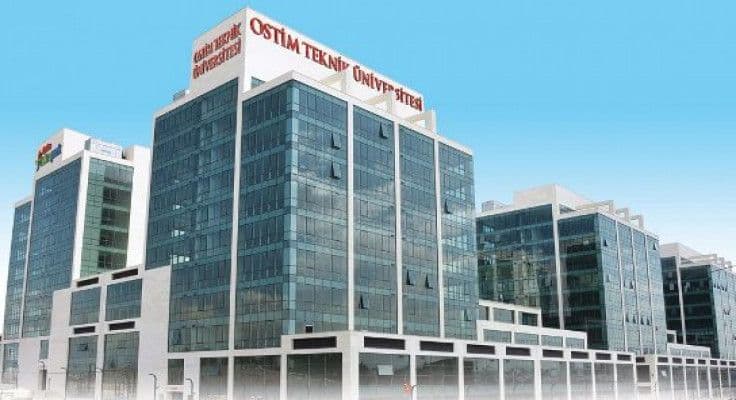
That's not marketing. The university's main campus is physically located at OSTIM Organized Industrial Zone - Ostim, 100. Yil Blv 55/F, Yenimahalle, Ankara - inside a zone that currently houses 6,200 enterprises with over 60,000 employees working across 17 industrial sectors and 139 business lines. Defense, aeronautics, rail systems, medical equipment, robotics, IoT, renewable energy, nanotechnology, construction machinery - all operating within walking distance of student labs. The rector himself has stated publicly that students complete at least one industrial-domain course every semester. That commitment is structural, not optional.
Here's the full picture for the 2026-2027 intake.
Understanding OSTIM: Why the Industrial Zone Defines the University
Before looking at programs and fees, it's worth understanding OSTIM itself, because the university's entire identity flows from it.
OSTIM Organized Industrial Zone was established in 1967 by a small industrial cooperative with 1,748 members. Over five decades, it became Turkey's largest industrial production area - covering approximately 5 million square meters, with the OSTIM Defense and Aviation Cluster (OSSA) alone comprising over 270 member companies and 10,000 employees across land, air, and naval platform manufacturing, composites, electronics, software, and unmanned systems.
OSTIM Foundation - the organization that manages this industrial ecosystem and governs the university - has an explicit mandate to support vocational training, technology development, technology transfer, and human resources development for enterprises operating in the zone. The Board of Trustees of OSTIM Technical University is composed of OSTIM industrialists and leading Turkish academics, not detached philanthropists. When the university says "industry-embedded education," it's describing a governance structure, not a curriculum slogan.
OSTIM Technopark, operating within the same zone, connects 18 universities, 8 technoparks, and 12 industrial zones - giving OSTİMTECH students access to a broader R&D and prototype development network that extends well beyond the main campus.
Rankings in 2026
OSTIM Technical University is young - it admitted its first students in the 2019-2020 academic year - so expecting it in the QS World University Rankings main band or THE global tiers would be premature. But its trajectory in web-based and research output rankings is real and measurable.
Webometrics 2025 places it at approximately 2,244th globally and 145th nationally among Turkish universities - a strong position for an institution just five years into operation. QS regional indicators for Turkey place it within the top tier of Turkish universities in its category, reflecting research collaboration and international outlook rather than just longevity.
Its focus on defense, aerospace, robotics, and nanotechnology - specialized sectors with high R&D intensity - means that as faculty publication rates grow and industrial research partnerships generate citable output, ranking positions will follow. For now, the practical measure is the employment rate of graduates and the depth of company relationships, both of which are built into the institutional architecture.
Programs and Faculties for 2026-2027
OSTIM Technical University operates three main faculties and one vocational school:
Faculty of Engineering: This is the heart of OSTİMTECH's academic offering.
Aerospace Engineering (English): One of a very small number of Turkish universities offering this program with regular practical industrial training in defense and aeronautics companies inside the OSTIM zone. The OSSA cluster provides direct company access for projects and internships.
Computer Engineering (English and Turkish): Software development, systems programming, cybersecurity applications, and AI-adjacent coursework. Most popular among international students.
Software Engineering (English): Focused specifically on software architecture and development cycles.
Electrical and Electronics Engineering (English and Turkish)
Mechanical Engineering (English and Turkish)
Materials Engineering and Nanotechnology (English): A genuinely rare undergraduate program in Turkey, reflecting OSTIM's manufacturing base in advanced materials and composites.
Artificial Intelligence Engineering: Growing program in direct response to company demand within the industrial zone.
Industrial Engineering, Energy Systems Engineering: Additional tracks completing the engineering portfolio.
Faculty of Architecture and Design: Interior Architecture, Urban Design, Industrial Product Design. Architecture programs require 5 years and include studio-based applied projects.
Faculty of Economics and Administrative Sciences: Business Administration, International Trade and Finance, Aviation Management, Information Systems Management, Economics. The Aviation Management program benefits from proximity to the OSSA aerospace cluster.
Vocational School: Two-year associate degree programs in Mechatronics, E-Commerce and Marketing, and Cybersecurity - shorter, affordable tracks for students seeking practical qualifications.
Dual Major Option: Multiple sources confirm OSTIM offers the possibility of pursuing a second major alongside the primary program, graduating with two certificates and increasing employment options without extending study duration significantly.
OSTIM Technical University Tuition Fees 2026-2027
Fees at OSTIM are among the most competitive in Turkey's private technical university sector. Here are the current verified figures:
Undergraduate programs (most engineering fields, business, architecture): approximately $2,250 to $6,000 per year. Computer Engineering and Aerospace Engineering in English sit at the higher end around $5,500 to $6,000; Turkish-taught engineering tracks start lower.
Vocational/associate degree programs: approximately $1,730 to $3,750 per year
Master's programs (thesis tracks): approximately $3,600 to $4,500 total for the full thesis program, paid across semesters
Non-thesis master's: slightly lower than thesis tracks
No application fee: the university does not charge for applications
Scholars available:
Turkiye Scholarships (YTB): The Turkish government's full scholarship program covers 100% of tuition, plus monthly stipend, accommodation, health insurance, and language training. OSTIM students are eligible to apply. Applications typically open in January each year for the following academic year.
Foundation scholarships: Trustee-level scholarships ranging from 25% to 100% tuition waivers, awarded competitively based on academic profile.
Early payment discounts and merit awards are additional reduction pathways.
Living costs in Ankara are consistently lower than Istanbul. Monthly expenses covering accommodation, food, and transport average €400 to €600, making Ankara one of the more affordable capital cities in the region for student living. The campus is accessible via the OSTIM metro station, making transport costs predictable and low.
What "Industry Embedded" Actually Looks Like in Practice
Every semester, each student completes at least one course in the industrial domain. That's the rector's stated commitment, and it reflects in how programs are structured. Engineering students don't just visit factories - they conduct project work, use company equipment, and complete internship hours inside OSTIM zone enterprises during their degree.
This model has significant implications for graduate outcomes. A 2023 study published in Studies in Higher Education drawing on data from 152,226 Australian graduates found that in-curricular work experience embedded through institutional partnerships produced measurably stronger graduate labour market outcomes than general student employment, and was among the highest-return activities universities could provide for graduate employability. The same research, led by Jackson and Rowe at Edith Cowan University, found that work-integrated learning was prioritized by graduate employers significantly above other credential signals.
OSTIM's architecture is precisely this model - not optional internship facilitation, but mandatory industrial-domain coursework every semester. The Turkish Union of Chambers of Industry, the Chamber of Defense and Aviation Industries, and the Chamber of Railways and Transport Industries all have formal partnership arrangements with the university, providing structured access that most university career centers can only approximate.
OSTIM Technopark's presence on the same site means students can also access prototype development facilities and R&D lab equipment that would be unavailable in a conventional university setting. As a doctoral researcher quoted in a 2025 study review observed about OSTİMTECH specifically: the "collaboration with OSTIM Industrial Zone companies has directly benefited research through equipment access and pilot testing opportunities."
Accreditation, ERASMUS, and International Recognition
YOK (Turkey's Higher Education Council): full national accreditation
Bologna Process / ECTS credits: degrees structured for European credit recognition
ERASMUS+: active membership. Student reviews confirm semester exchanges at European partner universities with practical-lab focus.
Recognized in EU countries and many Middle Eastern and African countries with bilateral recognition agreements with Turkey
Admission Requirements and Deadlines for 2026
Applications are submitted online through application.ostimteknik.edu.tr at no fee. Documents required:
High school diploma with notarized or embassy-certified Turkish translation (undergraduate)
Bachelor's degree documentation (graduate programs)
Passport copy and photograph
English proficiency for English-medium programs: TOEFL, IELTS, or institutional exam. Turkish proficiency for Turkish-medium programs via TOMER or equivalent.
Some graduate programs require recommendation letters or an interview
Application deadlines: July for fall intake; December for spring. Rolling admissions mean some seats remain available after initial deadlines.
YOS (Turkish university entrance exam for international students) is not required.
Who Is OSTIM Technical University Right For?
OSTİMTECH is the clearest option for students who want genuinely embedded industry exposure - not described as a feature, but built into every semester of their degree. It's particularly compelling for aerospace engineering students (very few Turkish universities offer it with this level of industry cluster access), nanotechnology and materials engineering students, and anyone in computer engineering, AI, or robotics who wants to work inside a functioning industrial ecosystem rather than studying it from a campus removed from it.
It's not the right choice if you want a large urban campus experience, medical or health science programs, or a university with decades of alumni networks. But for applied technical education in Ankara at fees that can be dramatically reduced through Turkiye Scholarships or foundation awards, OSTIM represents something genuinely unusual in the Turkish higher education landscape: a university whose Board of Trustees are the same people running the factories next door. The Fall 2026 intake opens in July.