Culture Shock in Turkey: What Every International Student Must Know Before Arrival

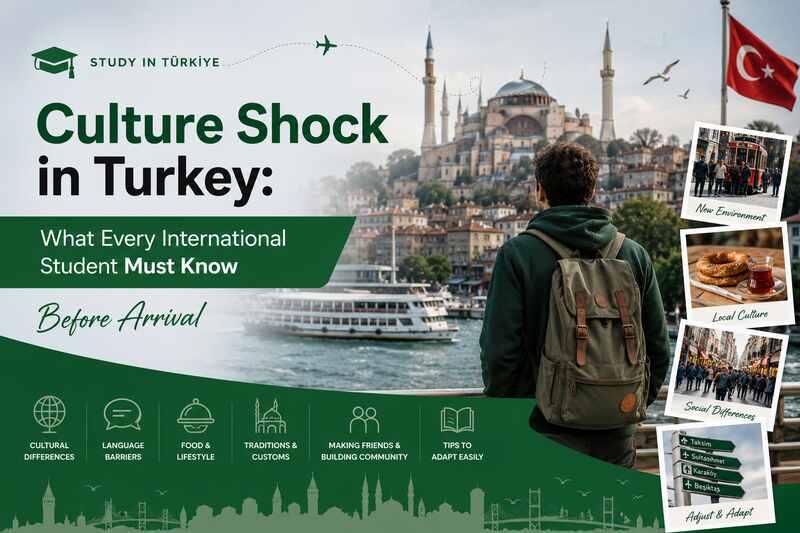
Let's be honest about something. The visa, the application, the denklik, the residence permit those feel like the hard parts. And they are genuinely complicated. But there's another kind of difficulty that most students don't prepare for at all, and it hits them not in a government office, but on a random Tuesday afternoon in their second week.
They say or do something that offends someone and have no idea why. Or they feel completely invisible in a social setting because they don't know the unspoken rules. Or they break a law they didn't know existed because it simply doesn't exist in their home country.
Culture shock in Turkey is real, and it affects almost every international student to some degree. Research published in peer-reviewed journals has confirmed that culture shock begins not when things go wrong, but the moment a student lands at the airport and starts navigating a genuinely different social world. The first few weeks are consistently the most disorienting and the ones with the least formal support.
This guide is designed to change that. Not to scare you Turkey is a warm, welcoming, genuinely wonderful place to live and study. But knowing what's different, what matters, what's legally serious, and what's culturally expected makes the entire experience easier, more respectful, and more enjoyable. And it helps you avoid the kind of embarrassing or costly mistakes that follow students for months.
Understanding Turkey First: Neither East Nor West, Both at Once
Turkey sits at a unique cultural intersection. It's a secular republic since 1923, with a constitution that formally separates religion and state. At the same time, roughly 98% of the population identifies as Muslim, and Islamic customs, values, and calendar events shape daily life in visible ways especially outside Istanbul's most cosmopolitan neighborhoods.
This duality confuses international students all the time. They arrive expecting either a fully Western European experience (because of Turkey's EU candidacy, NATO membership, and modern universities) or a very conservative Middle Eastern one. Turkey is neither, and both. In Istanbul on a Friday evening, you'll find packed nightclubs alongside packed mosques. In Konya or Erzurum, the social atmosphere is considerably more conservative than Istanbul or Ankara.
The city your university is in matters. Istanbul and Ankara are diverse, fast-paced, and relatively tolerant of different lifestyles. Smaller university cities like Kayseri, Trabzon, or Bursa have their own cultures that lean more traditional. Wherever you study, understanding the local social climate not just the national one is important.
Turkish Hospitality: What It Means and How to Respond
One of the first things you'll notice in Turkey is how warmly people welcome guests and strangers. This isn't a tourist-industry performance hospitality (misafirperverlik in Turkish) is a genuine pillar of Turkish culture, rooted in both tradition and Islamic values of generosity.
Tea (çay): You will be offered tea constantly in university offices, in shops, by neighbors, by new acquaintances. Accepting at least one cup is not just polite, it's part of how relationships begin in Turkey. A small glass of çay is how a conversation opens. Refusing without explanation can come across as cold or unfriendly. If you genuinely can't stay, place one hand on your chest and indicate you need to go that gesture is understood and respected.
Home invitations: Being invited to a Turkish person's home is a genuine honor, not a casual social arrangement. If you are invited, a few things matter. Remove your shoes at the door this is standard in virtually every Turkish home and not doing it is considered disrespectful. Bring a small gift: sweets, chocolate, pastries, or fruit. Avoid gifting alcohol or anything pork-based unless you know for certain that your host consumes these. Compliment the food Turks take real pride in their cooking and a sincere compliment goes a long way.
Gifts: Gifts are typically not opened in front of the giver. Don't be surprised or offended if your gift is set aside politely. It's a cultural norm that emphasizes the thought rather than the object.
Addressing people: Turkish culture has formal and informal registers. With people you don't know well, or elders, use respectful titles. Adding "Bey" after a man's first name (Ahmet Bey) or "Hanım" after a woman's (Fatma Hanım) is a sign of respect. Calling older people "amca" (uncle) or "teyze" (aunt) even if they're strangers is considered warm and appropriate.
Laws You Must Know Before You Arrive
This section is not optional reading. Turkey's legal system differs significantly from many students' home countries, and violations even accidental ones can result in fines, detention, or deportation. These are not exaggerations.
You must carry ID at all times. Turkish law requires all foreign nationals to carry identification specifically your passport or your residence permit card (ikamet) at all times. Being stopped by police without ID is a serious inconvenience at best. Carry your ikamet card once you have it. Before it arrives, keep a certified copy of your passport on you and the original secure but accessible.
Insulting the Turkish nation, flag, or state is a criminal offense. Under Turkish Penal Code Article 301, publicly insulting "Türklüğü" (Turkishness), state institutions, or the national flag is a prosecutable offense. This applies to social media posts too. Students from countries with strong free speech traditions sometimes don't realize that what they'd casually post online at home can result in real legal trouble in Turkey. Think carefully about any public statements that touch on Turkish national identity, historical events, or political figures.
Drug laws are very strict - no exceptions. Turkey has zero tolerance for drugs. Possession of any controlled substance including marijuana, which is legal in many countries students come from carries serious criminal penalties. There is no grey area, no medical marijuana exception, and no leniency for tourists or students. If you come from a country where cannabis is normalized, adjust your expectations completely before you arrive.
E-cigarettes and vaping devices are banned. Bringing vaping equipment into Turkey is illegal. Customs officers at Turkish airports actively scan for vape devices, and they are confiscated on arrival. If you vape, plan for this before you travel.
Antiques and cultural artifacts cannot be removed from Turkey. Turkish law defines "antiquities" broadly including rocks, fossils, and old-looking objects from historical sites or beaches. Picking up what looks like an interesting stone from Ephesus and taking it home can result in arrest. Don't take anything that looks old from any historical site. Buy only from authorized dealers if you want souvenirs that could be considered antiques, and keep your receipts and certificates.
Public displays of affection are context-dependent. Holding hands is generally acceptable in urban areas. More intimate displays of affection in public kissing, embracing can attract unwanted attention outside cosmopolitan areas and are genuinely inappropriate near mosques or in more conservative neighborhoods. Read the environment around you.
Photography requires discretion. Taking photos of people without permission especially during prayer is disrespectful and in certain contexts can create real problems. Street photography in general is usually fine, but always ask before taking close-up portraits of individuals.
Ramadan: What Changes and How to Behave
At some point during your studies in Turkey, you will experience Ramadan (Ramazan in Turkish). In 2026, Ramadan ran from late February to late March. The dates shift earlier each year because the Islamic calendar is lunar.
Ramadan is the holiest month in Islam, during which observant Muslims fast from dawn to sunset no food, water, or smoking during daylight hours. Turkey is a secular country, so restaurants stay open, public transport keeps running, and non-Muslim students are not expected to fast. But there are things you should be aware of:
Respect daytime fasting in public. While it's not illegal to eat or drink in public during Ramadan in Turkey (unlike some other Muslim-majority countries), doing so loudly or ostentatiously in front of people who are fasting is considered disrespectful. In more conservative areas or neighborhoods, it's worth being especially discreet about eating and drinking during daylight hours.
Evening comes alive. Iftar the evening meal that breaks the fast is one of the most social events of the Turkish cultural calendar. Streets fill up after sunset. Families gather. Many restaurants offer special iftar menus. Being invited to an iftar dinner is a genuinely warm cultural experience if you are invited, accept.
Noise at night. During Ramadan, drumming in the early hours before dawn (sahur) to wake fasting households for the pre-dawn meal is common in many Turkish neighborhoods. If you're a light sleeper, prepare for this.
Eid al-Fitr (Ramazan Bayramı): The celebration at the end of Ramadan is a public holiday in Turkey, usually 3 days. Universities, banks, and government offices close. Plan any administrative deadlines around it.
Social Norms That Will Catch You Off Guard
Beyond the formal laws and religious calendar, there's a layer of everyday social expectations that most international students figure out the hard way. Here's what to know in advance.
The head tilt for "no": Turkish people often indicate "no" by tilting their head slightly upward and backward, sometimes with a "tsk" sound made with the tongue. It looks like surprise or a shrug to someone unfamiliar with it. If you ask someone a question and get this response, that's a no not confusion.
Shoes off indoors: In homes, and often in certain prayer spaces and cultural sites, shoes come off at the door. Don't step onto carpeted areas in mosque lobbies or home entryways with shoes on. Follow what others around you are doing.
Smoking: Turkey has one of the higher rates of smoking in Europe. Smoking outdoors is very common. Indoor smoking in public spaces is officially banned, but enforcement varies. If you are a non-smoker, be prepared for more second-hand smoke exposure than you might be used to, especially in outdoor seating areas of restaurants and cafes.
Gender norms in social spaces: Turkey's cities are generally mixed-gender environments and women are visible everywhere in public life. But in more traditional areas or social circles, there may be informal expectations about who sits where, who speaks first, and how mixed-gender groups interact. This is not universal Istanbul nightlife looks nothing like a conservative tea house in a rural town but being observant rather than making assumptions helps.
Bargaining: In bazaars (çarşı) and markets, prices are often negotiable. In regular shops and restaurants with menus, they're not. If you're at a market and a price seems high, a polite counter-offer is completely normal. Starting far too low can be seen as insulting. Meeting around 20–30% below the initial offer is common.
Turkish time: Social gatherings often start later than the stated time. Arriving exactly at the invited hour for an informal gathering can occasionally mean you're the first one there. For official appointments, university meetings, and government offices, being on time or slightly early is expected.
Food, Drink, and Dietary Considerations
Turkish cuisine is one of the country's great pleasures. Diverse, fresh, and generally affordable this is one area where most international students adjust quickly and happily.
A few practical things to know:
Pork is not widely available. As a Muslim-majority country, pork products are not standard in Turkish restaurants or supermarkets. Chicken, beef, and lamb are the dominant meats. If you eat pork, you can find it at some international supermarkets in Istanbul (like Macro Center or CarrefourSA), but don't expect to find it easily everywhere.
Alcohol is legal but expensive. Turkey taxes alcohol heavily. A beer at a restaurant costs considerably more than in many European countries. Alcohol is available at licensed restaurants, bars, and some supermarkets (those licensed to sell it). It is not sold everywhere smaller neighborhood shops (bakkal) generally don't sell it, and in more conservative neighborhoods there may be fewer establishments that serve it at all.
Tap water: In Istanbul, tap water is chlorinated and officially safe, but most locals and international students drink bottled or filtered water. Buying large water bottles from supermarkets (5L or 10L) is cheap and practical.
Turkish breakfast (kahvaltı): The Turkish breakfast is a genuine cultural institution spreads of cheese, olives, tomatoes, eggs, honey, cream, and bread. University cafeterias won't replicate it fully, but finding a local breakfast café (kahvaltı salonu) near your accommodation is one of the best small pleasures of student life in Turkey.
City-Specific Cultural Notes
Where you study in Turkey shapes your cultural experience significantly. Here's a brief orientation for the most common student cities:
Istanbul: The most cosmopolitan and culturally diverse city in Turkey. European and Asian sides have different characters. Beyoğlu, Kadıköy, Beşiktaş, and Şişli are the neighborhoods most international students gravitate toward. The city is fast, crowded, and genuinely vibrant. Culture shock in Istanbul is usually milder than in smaller cities because of how globally diverse the population already is.
Ankara: The capital is more formal, political, and quieter than Istanbul. It has a large student population across multiple universities. Socially it's more conservative than Istanbul but still a modern city with a full range of services and social life.
Bursa: Growing as a student city. More conservative than Istanbul. A historic and beautiful city with a strong local culture great for students who want a calmer environment.
Konya: One of the more conservative university cities in Turkey. Known for its religious significance and cultural traditions. International students here may find daily life more socially regulated than in Istanbul. Dressing more modestly and being mindful of local customs is especially important here.
Trabzon, Erzurum, Kayseri: Smaller university cities with more traditional cultures. Very affordable, close-knit communities, but considerably less English spoken in daily life and more conservative social norms. Students who are flexible and curious do well; those who need a cosmopolitan social environment may find these cities harder.
The Cultural Orientation We Provide; and Why It Matters
Most agencies, if they mention cultural preparation at all, send a PDF or a link to a website. Students read it once on the plane and forget it.
That's not how cultural orientation actually works. What helps students is a real conversation specific to the city they're moving to, the neighborhood they'll live in, the university they'll attend covering the things that actually come up in real life. What to do when a landlord invites you for tea. How to handle Friday prayer times in certain areas. What the local transport etiquette is. How students typically dress on campus versus in the city. Which areas are safer at which times.
At universityfinder.org, every student we work with gets a genuine cultural orientation session before they travel. Not a pamphlet. A conversation. With people who live in Turkey, work with international students daily, and know exactly what the first-week surprises are because they've seen them hundreds of times.
It costs you nothing. And it can save you from the kind of misunderstanding that, in a new country, can take weeks to recover from socially or legally.
Culture shock in Turkey doesn't have to be a crisis. With the right preparation, it becomes what it should be the interesting, challenging, and ultimately rewarding experience of becoming someone who can navigate a genuinely different world. [internal link: /apply-free]
Frequently Asked Questions
Q: Is Turkey safe for international students? A: Generally yes. Turkey is home to over 300,000 international students and the majority have safe, positive experiences. Istanbul, Ankara, and most university cities have visible student populations from dozens of countries. The same common-sense precautions you'd take in any large city apply here be aware of your surroundings, don't flash expensive items, and know the areas of your city. Follow local news and your university's security advisories for any specific updates.
Q: Do I need to dress conservatively in Turkey? A: It depends on where you are. On university campuses and in cosmopolitan city neighborhoods, international dress norms are completely normal. Near mosques, in more conservative neighborhoods, or in smaller cities, dressing modestly covering shoulders and knees is respectful and practical. You don't need a wardrobe overhaul, just awareness of context.
Q: Can I drink alcohol as an international student in Turkey? A: Yes, alcohol is legal for adults (18+) in Turkey. It's available at licensed venues and certain supermarkets. It's expensive compared to many countries due to heavy taxation. Be discreet about drinking in public spaces and especially near mosques or during Ramadan. Drinking in university dormitories is generally against house rules even where it's legally allowed.
Q: What if I make a cultural mistake? A: Turkish people are generally very understanding of foreigners navigating an unfamiliar culture. A genuine apology and show of respect goes a very long way. The situations that cause actual problems are usually not innocent social slips, but actions that touch on legally sensitive areas national identity, drugs, public order. On social and cultural matters, Turks are warm hosts who appreciate the effort to learn, not rigid enforcers.
Q: Do I need to learn Turkish? A: For daily life, some basic Turkish is very helpful especially outside Istanbul. Most universities with English-medium programs have staff who speak English, and campus life is manageable in English. But grocery shopping, talking to landlords, navigating government offices, and simply being able to communicate in emergencies is much easier with even basic Turkish. Start with a few hundred common phrases before you arrive, and take your mandatory university Turkish language courses seriously rather than just passing them. [internal link: /blog/course-selection-turkish-universities-international-students]
Q: Is it true that social media posts can cause legal trouble in Turkey? A: Yes. Turkish law covers online expression as well as public statements. Posts that insult state institutions, the national flag, or are construed as defamatory to Turkish national identity have resulted in legal proceedings. This is not the norm for ordinary social media use, but students from countries with broad free speech protections should be aware that the legal boundaries in Turkey are drawn differently. When in doubt, don't post it.
Your Orientation Starts Before You Land
Culture shock is not a sign of weakness or poor preparation. Research consistently shows that virtually all international students experience it at some level the question is whether they go through it alone and unprepared, or whether they go through it with real information and real support.
Turkey is an extraordinary place to spend your student years. The history, the food, the warmth of the people, the beauty of the cities, the sheer diversity of experience available all of it is genuinely worth the adjustment.
But that adjustment is easier with proper preparation. Know the laws. Understand the customs. Learn what to expect in your specific city. Go into your first semester with cultural awareness, not cultural confusion.
At universityfinder.org, cultural orientation is built into how we support every student we work with before departure, not after arrival. It's one part of a full journey of support that starts from the day you first contact us and continues until you graduate.