Beykent University Ranking 2026 - The Honest, Complete Guide Before You Apply

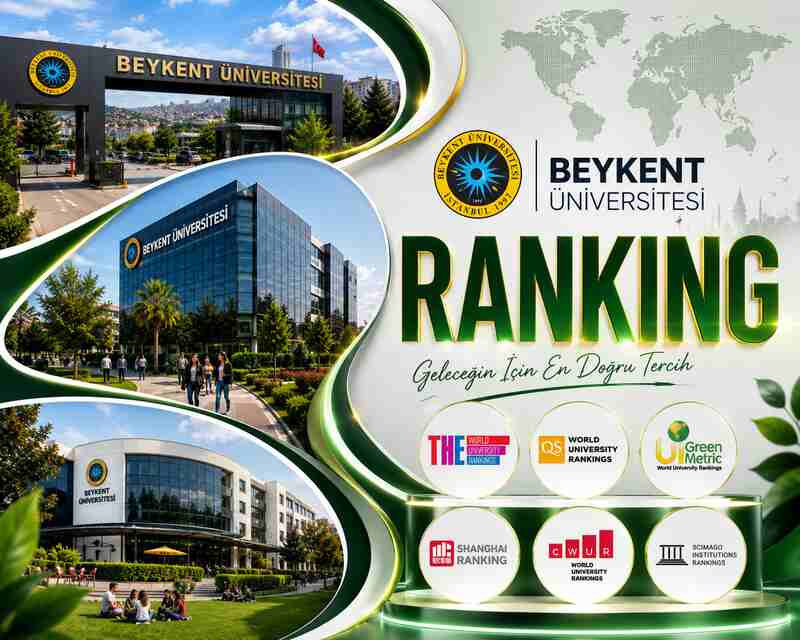
Istanbul Beykent University has been running for nearly 30 years. It has four campuses spread across some of Istanbul's most recognizable districts. It started its academic life with a partnership agreement with a British university. And yet when you search "Beykent University ranking," you'll get wildly different numbers from different websites and very few of them explain what any of those numbers actually mean for you as a student.
So let me fix that. This guide walks through every ranking system Beykent appears in, explains each number honestly, highlights the subject-level results that no competitor bothers to mention, and brings in peer-reviewed research to back up the programs that matter most business, economics, communication, and fine arts.
Beykent University Ranking - All Systems for 2026
Webometrics 2026 Webometrics places Beykent at approximately 2,716th globally and 74th nationally in Turkey. Webometrics measures online academic presence how many pages a university publishes, how often those pages are cited, and the institution's overall digital footprint. A national position of 74th puts Beykent solidly in the top 40% of Turkish universities by this measure.
EduRank 2026 EduRank's overall placement for Beykent is 74th in Turkey and 3,575th globally, based on 3,567 academic publications and 24,149 citations. That's a respectable publication base for a private foundation university.
But the subject-level breakdown is where the genuinely useful data lives and this is what no competing article covers:
Business: 55th in Turkey, 2,332nd globally, 1,023 publications covering Management, Finance, Marketing, and Business Strategy. This is Beykent's single strongest EduRank subject result.
Economics: 67th in Turkey, 2,467th globally, 757 publications covering Finance, Development Studies, Econometrics, International Trade, and International Economics
Liberal Arts & Social Sciences: 101st in Turkey, 2,959th globally, 2,010 publications (Philosophy, Political Science, Law, History, Sociology)
Computer Science: 109th in Turkey, 3,864th globally, 1,154 publications (AI, Machine Learning, Cybersecurity, Telecommunications)
Psychology: 107th in Turkey, 3,716th globally
Mathematics: 107th in Turkey, 3,544th globally
Engineering: 114th in Turkey, 3,970th globally, Materials Science, Optical Engineering, Electrical Engineering
Physics: 113th in Turkey, 3,786th globally
Medicine: 116th in Turkey, 3,966th globally, Pathology, Surgery, Psychiatry, Radiology, Public Health
The Business and Economics positions (55th and 67th in Turkey respectively) are the most meaningful subject rankings for Beykent's student population. They indicate that the Faculty of Economics and Administrative Sciences has an active research base faculty publishing and being cited in Finance, Development Studies, and Econometrics at a nationally competitive level.
QS Europe University Rankings, Western Asia 2026 QS places Beykent at #131 in Western Asia in the 2026 QS Europe University Rankings the same band as Halic University. QS is the ranking system most commonly recognized by employers globally, and the Western Asia regional placement confirms Beykent as a QS-evaluated institution. It does not appear in the main QS World University Rankings global band table.
Nature Index, Health Sciences The Nature Index, which tracks high-quality research published in leading natural science journals, places Beykent at #2,091 globally in Health Sciences. This is a niche but meaningful signal about the quality of research output in the health-adjacent disciplines (Medicine, Biology, Pharmaceutical science-adjacent) relevant for students considering the Faculty of Medicine or health sciences programs.
SCImago Institutions Rankings 2025 SCImago places Beykent at 3,907th globally a research-output-weighted composite metric that reflects steady growth in indexed journal publications.
UniRanks 2026 UniRanks gives Beykent a global rank of 2,982 with a score of 59.92 notably, UniRanks classifies it as a "Elite University" within its scoring framework, reflecting consistency across multiple evaluation indicators.
University Guru Meta-Ranking Aggregating across 7+ ranking systems, University Guru places Beykent at #32 among Istanbul universities a composite position that reflects consistent mid-table performance rather than a single standout metric.
The honest synthesis Beykent is a top-75 Turkish university by research output (EduRank, Webometrics), QS Western Asia-listed, Nature Index-active in health sciences, and SCImago-tracked. Its strongest individual metric is Business at 55th nationally which happens to be its most popular program area. For a private foundation university with nearly 30,000 students, that profile is solid and multi-system consistent.
The Founding Story; What the John Moores Liverpool Connection Means
Most Beykent articles say "founded in 1997" and stop there. THE's official profile says something more interesting: the university "began life in 1995 as part of an agreement between the university's founder, businessman Adem Çelik, and John Moores University, Liverpool."
John Moores University is a respected UK university with particular strength in business, law, and applied sciences. The initial partnership before Beykent became fully independent gave the founding faculty access to British academic models, curriculum frameworks, and quality benchmarks from the mid-1990s onwards. Beykent became an independent, not-for-profit university a couple of years later, but the foundational academic DNA carries that British HE influence.
This matters for two reasons. First, it explains why Beykent's Business and Economics programs have a relatively strong EduRank profile despite being a private Turkish university: the academic culture was shaped early by a research-active British partner. Second, it gives Beykent a credibility baseline that universities started from scratch in the 2010s don't have.
Also worth knowing: former Turkish Prime Minister Ahmet Davutoğlu worked as Head of the Department of International Relations at Beykent University, and former Turkish Minister of Education Ömer Dinçer served there as a lecturer and dean. These institutional connections reflect an academic culture that attracted serious public intellectuals, not just hired teachers.
The Four Campuses; Where Each Faculty Lives
Beykent has four campuses, and knowing which one your faculty is on matters for accommodation planning:
1. Ayazağa Campus (Sarıyer/Maslak) The original main campus Faculty of Engineering and Architecture, Faculty of Fine Arts, Faculty of Communication. This is the engineering and creative arts hub, in the northern part of Istanbul's European side near the Maslak business district. Well-connected by metro.
2. Büyükçekmece Campus (Cumhuriyet district, coastal European side) Faculty of Medicine, Faculty of Dentistry, Faculty of Health Sciences, Faculty of Arts and Sciences, Faculty of Applied Sciences, School of Foreign Languages. The medical and dental faculties share a building with a shopping complex that includes hotels, cinemas, and restaurants an unusual arrangement, but practically useful for students and patients. This campus sits in the coastal Büyükçekmece area, quieter and greener than central Istanbul.
3. Hadımköy Campus (Esenyurt/Akçaburgaz) Faculty of Economics and Administrative Sciences, Vocational School. Established 2017–2018. Located on the far western European side of Istanbul.
4. Taksim Campus (Beyoğlu, Sıraselviler Caddesi) Faculty of Law specifically housed in Istanbul's most iconic cultural district, steps from Taksim Square. The Sıraselviler Caddesi address is one of Istanbul's most recognizable streets, lined with embassies, cultural institutions, and legal offices. For law students who care about proximity to courts, legal firms, and the professional environment they're training for, this campus location is genuinely distinctive.
Business and Economics at Beykent; The Programs the Rankings Confirm
Business Administration and Economics are the most-searched programs for international students at Beykent, and EduRank confirms why they're worth taking seriously. Business at 55th nationally and Economics at 67th nationally out of 175 universities places these programs in the top third of Turkish universities by research output in these fields.
For students, this means the Faculty of Economics and Administrative Sciences isn't just running teaching programs: the faculty publishes in Finance, Development Studies, and International Trade at a level that generates citations internationally. That matters if you're planning a master's or PhD after your bachelor's, or if you want to study under academically active supervisors.
Research on what makes business education effective in a Turkish context is instructive. A 2024 study by Ilhan-Nas et al. published in SAGE Open specifically examining Turkish business school curricula found that the most critical expectation from industry stakeholders is university-industry cooperation, with applied learning through collaborative experiences and teamwork skills identified as the key areas needing improvement in Turkish business education. Beykent's documented practice of sending students on over 100 industrial and commercial visits per year is a direct institutional response to exactly this gap.
A 2025 study by Naseer et al. in Scientific Reports found that industry-enriched project-based learning frameworks increased student employability skills by 25% and engagement by 30% compared to standard curricula affirming that the quality of industry linkages built into a business degree curriculum matters more than prestige alone.
For students from the MENA region specifically: a 2024 study by Alnajjar et al. in the European Journal of Psychology and Educational Research found that the primary motivations for international students choosing Turkey for higher education were quality and diversity of programs, affordability, ease of living, and cultural and historical connection factors that directly apply to Beykent's position in Istanbul's private market.
Communication and Fine Arts; The Studios, the City, the Careers
Beykent's Faculty of Communication and Faculty of Fine Arts are based at the Ayazağa campus and they're worth serious attention for students targeting media, design, cinema, and public relations careers.
Istanbul is one of the world's great cities for media. Turkish TV and film production is globally distributed. The advertising, digital media, and fashion industries are substantial. For communication and fine arts students, being at Beykent in Istanbul isn't just a location advantage it's an industry ecosystem advantage.
Research on communication and media education consistently shows that practical, industry-connected training is what separates effective graduates from theoretical ones. A 2021 study by Wallis in the Journal of Education and Work found that media students need five interrelated forms of graduate capital — human, social, cultural, psychological, and identity capital — and that the balance between practical skills and critical understanding is the central challenge for media educators. Beykent's emphasis on studios, workshops, and direct industry connections through 100+ annual company visits is the institutional answer to this research imperative.
A 2022 study by Arnold in Industry and Higher Education found that media graduates consistently pointed to work placements and practical activities as the most valuable components of their degree for employment outcomes, and that explicit skills modules teaching students how to articulate the connection between their degree and employment significantly improved graduates' understanding of their own employability.
For Beykent's fine arts students specifically: the Ayazağa campus location near Maslak Istanbul's business and creative hub provides proximity to advertising agencies, production companies, and design studios that are not accessible from campuses in suburban or coastal districts.
The Russian-Language Programs; A Rare Differentiator
This is something almost no Beykent article mentions: the university offers programs through Russian-speaking faculty, taught by native Russian professors. Among Turkish private universities, this is genuinely rare.
For students from Russia, Kazakhstan, Uzbekistan, Azerbaijan, Turkmenistan, and other former Soviet states, studying at a Turkish university with Russian-medium programs or Russian-proficient faculty is a significant practical advantage. It lowers language barriers in the early semesters, provides cultural familiarity, and creates a peer community for students from these regions.
Beykent also participates in the Mevlana Exchange Program specifically designed for student exchanges between Turkey and countries that don't participate in Erasmus+ (primarily in Asia and the former Soviet region). For students from these countries, this provides an outbound exchange option equivalent to what European students get through Erasmus.
Programs and Fees for International Students (2026)
Here is the honest fee guide across Beykent's main programs:
Standard Bachelor's Programs (Engineering, Business, Economics, Communication, Fine Arts, Social Sciences)
Most programs in Turkish: approximately $3,000–$3,500/year
Most programs in English: approximately $4,900–$5,000/year
Architecture: approximately $4,500–$5,000/year
Computer Engineering (English): approximately $4,900–$5,000/year
Law: approximately $4,500–$5,000/year
Medicine
Turkish medium (6-year program): approximately $13,500–$16,100/year (note: medicine is Turkish-only; English tracks not available)
Dentistry
Turkish medium (5-year program): approximately $11,000–$13,000/year
Master's Programs
Non-thesis: approximately $4,000–$6,000 total for the program
Thesis-track: slightly higher
MBA and health-related masters: up to approximately $7,500–$8,000 total
Doctoral Programs
Approximately $4,000 total (program rules apply)
Fees are paid by semester: installment payment is available and commonly used by international students. Fee ranges reflect programs before scholarship. Scholarships are available on merit-basis and through early-application windows.
Living costs in Istanbul: approximately $400–$600/month for a student budget covering accommodation, food, transportation, and personal expenses.
Accreditation and International Recognition
YÖK: Full accreditation by Turkey's Council of Higher Education. All programs legally recognized.
MYK (Mesleki Yeterlilik Kurumu): Professional qualifications accreditation, covering vocational competency assessment across applicable programs.
Bologna Process / ECTS: Beykent is Bologna-compliant and uses ECTS credits. Graduates receive a Diploma Supplement.
Erasmus+: Full participant. Students can study one to two semesters at partner universities across 22 European countries (130+ partner institutions). This is one of the broader Erasmus networks among Istanbul private universities.
Mevlana Exchange: Extends exchange opportunities to countries outside Erasmus coverage, particularly relevant for students from Russia, Central Asia, and the broader region.
EU Countries: Degrees recognized across EU member states through Bologna alignment.
Arab Countries: Recognized in Jordan, Libya, Egypt, Palestine, Syria, and Yemen.
Double Major and Minor Options
Beykent formally allows high-performing students to pursue a double major earning two full bachelor's degrees simultaneously or a minor qualification alongside their primary degree. This is not a casual option: it requires academic performance to qualify and adds a real second credential to the student's record.
For students who want to combine, say, Computer Engineering with Business Administration, or Communication with Law, the double major pathway is a concrete career differentiation tool. Very few Istanbul private universities formalize this option as clearly as Beykent does.
How Beykent Compares to Peer Istanbul Private Universities
University | EduRank Turkey | QS Western Asia | Business EduRank Turkey | Standard Bachelor's (EN) | Key Strength |
|---|---|---|---|---|---|
Beykent University | 74th | #131 | 55th | $4,900–$5,000/yr | Business/Econ, Communication, 4 central campuses |
Halic University | 70th | #131 | ~100th | ~$4,000/yr (after discount) | Vet med, conservatory, Golden Horn location |
Istanbul Kultur University | 64th | #79 | ~102nd | $3,000–$4,500/yr | IR/Diplomacy, MÜDEK engineering |
Nisantasi University | 78th | #38 | Similar range | $2,450–$3,000/yr | EAAE comms, aviation, lower fees |
Istanbul Okan University | 77th | #79 | Similar range | $4,000–$4,500/yr | ABET engineering, own hospital |
The comparison that stands out most: Beykent's Business EduRank position (55th in Turkey) outperforms Halic, IKU, Nisantasi, and Okan in this specific field. If Business Administration or Economics is your program, Beykent's research output in these subjects is stronger than most of its peer competitors at similar price points.
On QS Western Asia, Beykent (#131) sits in the same band as Halic (#131) but below IKU (#79), Okan (#79), and significantly below Nisantasi (#38). The QS position reflects academic reputation surveys where larger, older institutions tend to accumulate more votes.
The fee comparison shows Beykent in the upper-mid range for English programs ($4,900–$5,000/year) more expensive than Nisantasi ($2,450–$3,000), similar to Okan ($4,000–$4,500), and with more centrally-located campuses than most competitors.
Frequently Asked Questions
Q: What is Beykent University's ranking in Turkey for 2026? A: EduRank places Beykent at 74th nationally and 3,575th globally based on research output. Webometrics places it at 74th nationally. Both place it consistently in the top 40–42% of Turkish universities. For Business specifically, EduRank places it 55th in Turkey and 2,332nd globally its strongest subject-level result.
Q: Is Beykent's medicine program available in English? A: No. Medicine at Beykent is a 6-year program available in Turkish only. Students need a minimum C1 Turkish proficiency to enter. Dentistry is similarly Turkish-medium. Students specifically needing English-medium medicine should look at Okan, IAU, or Nisantasi.
Q: What makes Beykent different from other Istanbul private universities? A: Several things: the Business EduRank position (55th nationally) is stronger than most peer institutions for the most popular program. The Taksim campus for Law places law students in Istanbul's cultural heart steps from courts and legal firms. The Russian-language program offering is rare among Turkish private universities. The founding partnership with John Moores Liverpool gives the institution a historical academic credibility baseline. And the breadth of four centrally-located Istanbul campuses means students are genuinely in the city, not a suburban outpost.
Q: Does Beykent have Erasmus+ opportunities? A: Yes. Beykent participates in Erasmus+ with 130+ partner universities across 22 European countries one of the broader Erasmus networks among Istanbul private universities. It also participates in Mevlana exchange for countries outside Erasmus coverage.
Q: Are Beykent degrees recognized in Arab countries? A: Yes. Beykent degrees are recognized in Jordan, Libya, Egypt, Palestine, Syria, and Yemen. Verify your specific country's current recognition requirements with the International Office before enrolling.
Q: Can students do a double major at Beykent? A: Yes. Beykent formally offers double major and minor programs. Eligibility requires maintaining academic performance standards. Students can combine programs from different faculties to graduate with two separate qualifications.
Q: What is the Nature Index position for Beykent? A: Beykent is placed at #2,091 globally in Health Sciences in the Nature Index a research quality indicator that tracks publications in leading natural science journals. This signals active, quality-assessed research in health-adjacent disciplines, relevant for medicine and biology students.
Final Verdict; Who Should Seriously Consider Beykent?
Let me give you the straight take.
Beykent University is not the right choice if you need a QS main table position, a top-50 national EduRank ranking, or ABET engineering accreditation. For those goals, Okan or IAU are better fits.
But Beykent is genuinely the right choice for:
Students studying Business Administration, Economics, or International Finance who want a faculty with one of the strongest EduRank research positions in these fields among Istanbul private universities (55th nationally for Business)
Law students who want a faculty literally located on Taksim's Sıraselviler Caddesi walking distance from courts, law firms, and Istanbul's legal ecosystem
Communication and Fine Arts students who want studio-based training with industry connections in one of the world's great creative cities
Students from Russia, Central Asia, or post-Soviet countries who want Russian-language program options or Mevlana exchange access
Students who want the flexibility of a double major or minor at a multi-campus Istanbul institution
universityfinder.org has a free university matching tool share your program, budget, and academic background and we'll compare Beykent against every other Istanbul private university that fits your specific situation.
Read more at: Beykent University Full Guide - Universityfinder.org